
Updated 7/5/2026
Choosing the right fishing hook can make a significant difference in your success on the water. With dozens of hook styles available, each is designed for specific baits, presentations, and target species. Understanding the differences between hook types, sizes, points, shanks, bends, and other design features will help you make better tackle decisions and improve your hookup ratio. Whether you're fishing with live bait, soft plastics, hard lures, or flies, this guide explains the most common fishing hook styles, their intended uses, and when each one performs best. Use this resource to learn how to select the right hook for your next fishing trip and increase your chances of landing more fish.
Parts of a Fishing Hook
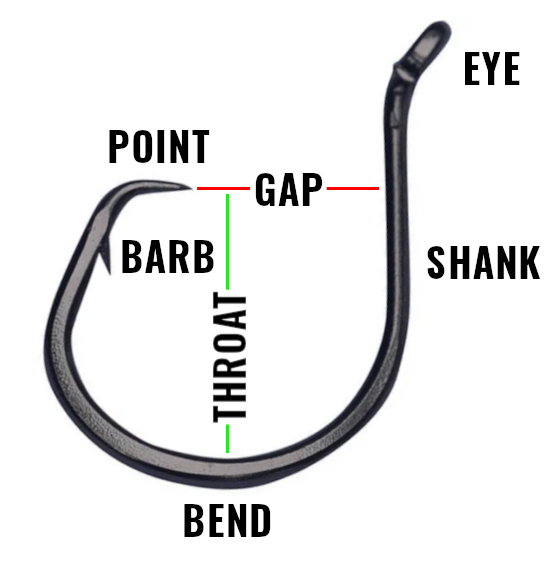 Eye
Eye
The eye of a fishing hook is the loop where your fishing line or leader is attached, and its design can influence hook performance and presentation. The three most common eye styles are straight, turned-up, and turned-down. Straight-eye hooks align directly with the shank, providing balanced hooksets and making them a popular choice for live bait, fly tying, and many general-purpose applications.
Turned-up eye hooks angle slightly upward and are commonly found on snell hooks and certain bait hooks. This design helps create a more natural hook angle when using a snell knot, making it effective for live bait presentations and some saltwater rigs. Turned-down eye hooks angle toward the hook point and are often used on worm hooks, octopus hooks, and many artificial lure applications. This configuration promotes a direct pulling angle that can improve hook penetration while helping soft plastics and other baits sit naturally. Choosing the right hook eye depends on your rigging method, target species, and the type of bait or lure you're using.
Shank
The shank is the straight portion of a fishing hook that extends from the eye to the bend, and its length and shape can affect how a hook performs with different baits and techniques. Hooks are commonly available with short, standard, or long shanks, as well as specialty designs such as offset and extra-wide gap (EWG) configurations.
Short-shank hooks are often used on crankbaits and other artificial lures because they help reduce leverage during the fight and can improve hookup retention. Standard-shank hooks are versatile and suitable for a wide range of live bait and artificial bait presentations. Long-shank hooks provide additional space for threading worms, minnows, or other live bait and make hook removal easier, making them a popular choice for panfish and trout. Offset and EWG shanks are ideal for rigging soft plastic worms, creature baits, and swimbaits, allowing anglers to create weedless presentations that perform well around grass, timber, and other heavy cover.
Bend
The bend of a fishing hook refers to the curved section between the shank and the point, and different bend styles are designed for specific fishing techniques. Common variations include round bends, wide gaps, extra-wide gaps (EWG), and specialty bends such as O'Shaughnessy or kahle designs. Round bends are versatile and work well with live bait and general freshwater fishing. Wide gap and EWG hooks provide additional space for bulky soft plastics, making them ideal for bass fishing with worms, creature baits, and swimbaits. Specialty bends are often used in saltwater fishing or with larger live baits, where increased holding power and strength are important. Selecting the proper bend helps improve hook penetration, bait presentation, and overall hookup success.
Gap
The gap of a fishing hook is the distance between the hook point and the shank. This measurement plays an important role in both bait presentation and hooking efficiency. A narrow gap is well suited for smaller live baits and thin-bodied soft plastics, while a wider gap provides the clearance needed for thicker worms, creature baits, swimbaits, and other bulky lures. If the gap is too small for the bait being used, the hook point can become obstructed, reducing hookset performance. Choosing the proper hook gap helps ensure better hook penetration, improved holding power, and more consistent hookups across a variety of fishing techniques.
Throat
The throat of a fishing hook is the distance between the hook point and the bend, measured along the inside of the hook. This dimension affects how deeply a hook can penetrate and how securely it holds a fish once hooked. Hooks with a deeper throat generally provide greater holding power, making them a good choice for larger, harder-fighting species. Shallower throats can work well with smaller fish and finesse presentations where quick penetration is important. When selecting a hook, consider the throat in combination with the gap, point, and bend to ensure the hook matches your bait, target species, and fishing technique for the best overall performance.
Barb
The barb on a fishing hook achieves two goals. First, it prevents cut or live bait from sliding off the tip of the hook. Second, it helps prevent a hooked fish from easily throwing the hook. Barbless hooks do exist, but they are typically only used in limited situations or where regulations require it.
Point
The point of the hook is the sharp part that pierces a fish's mouth, and sometimes our skin. Points can be inline with the shank, or offset from the shank. Offset points increase hookup rates but can increase catch mortality if the fish swallows the hook. Inline points may not successfully hook fish as often as offset points, but they are so good at decreasing catch mortality rates that they are sometimes required in fishing regulations. You'll see inline hook regulations often when fishing species with slot limits.
Fishing Hook Types
Aberdeen Hook
Aberdeen hooks are lightweight, long-shank hooks made from relatively fine wire, making them ideal for fishing with live bait such as minnows, worms, and insects. Their long shank allows for easy baiting and quick hook removal, which is especially useful when targeting panfish, crappie, perch, and trout. The thin wire also penetrates easily with minimal force, improving hooksets with light tackle. One advantage of Aberdeen hooks is that they can often be bent free if snagged on underwater cover, helping anglers recover their rigs. However, the same fine-wire construction makes them less suitable for large, hard-fighting fish, as they can straighten under heavy pressure. Aberdeen hooks are best suited for freshwater finesse and live bait presentations.
Baitholder Hook
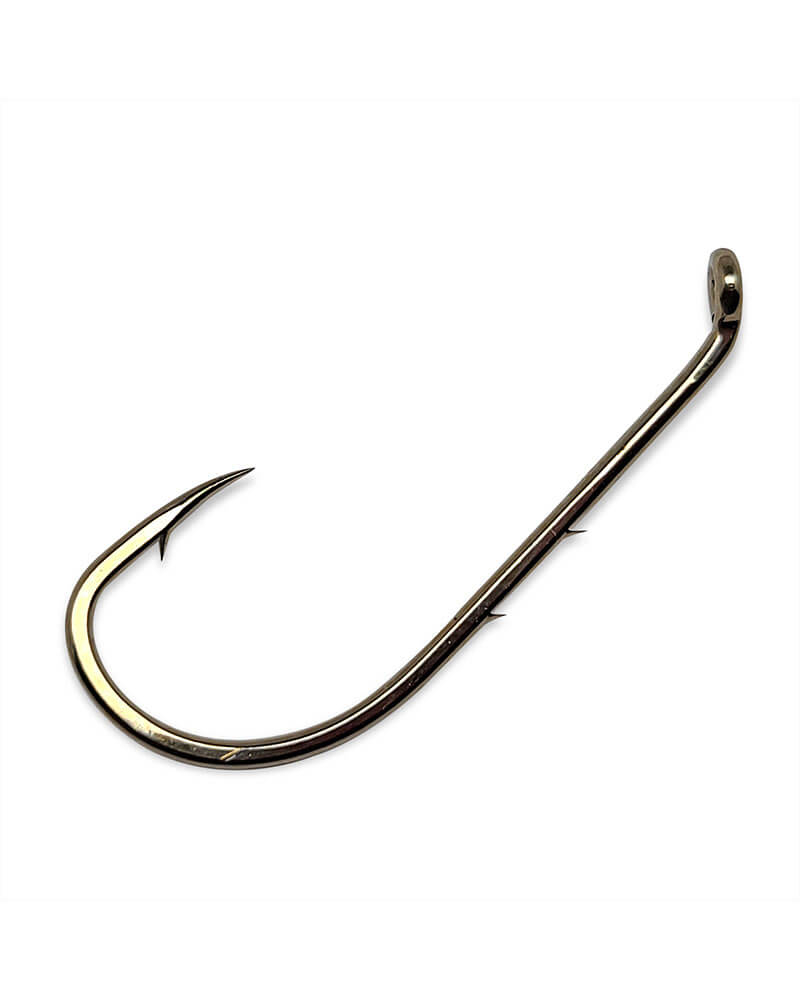
Baitholder hooks are traditional fishing hooks designed with one or more small barbs along the shank that help keep live or natural bait securely in place. These retaining barbs prevent worms, minnows, cut bait, and other soft baits from sliding down the hook during casting or repeated bites, making baitholder hooks a dependable choice for natural bait fishing.
Browse baitholder hooks for sale
One of the biggest advantages of a baitholder hook is its ability to keep bait firmly attached, reducing the need for frequent rebaiting and helping anglers fish more efficiently. They are commonly used when targeting panfish, trout, catfish, walleye, and other species that readily take live or prepared bait. The primary disadvantage is that the shank barbs can make baiting more difficult and may tear delicate baits during rigging. Despite this, baitholder hooks remain a versatile and reliable option whenever natural bait presentations are the preferred fishing method.
Circle Hook
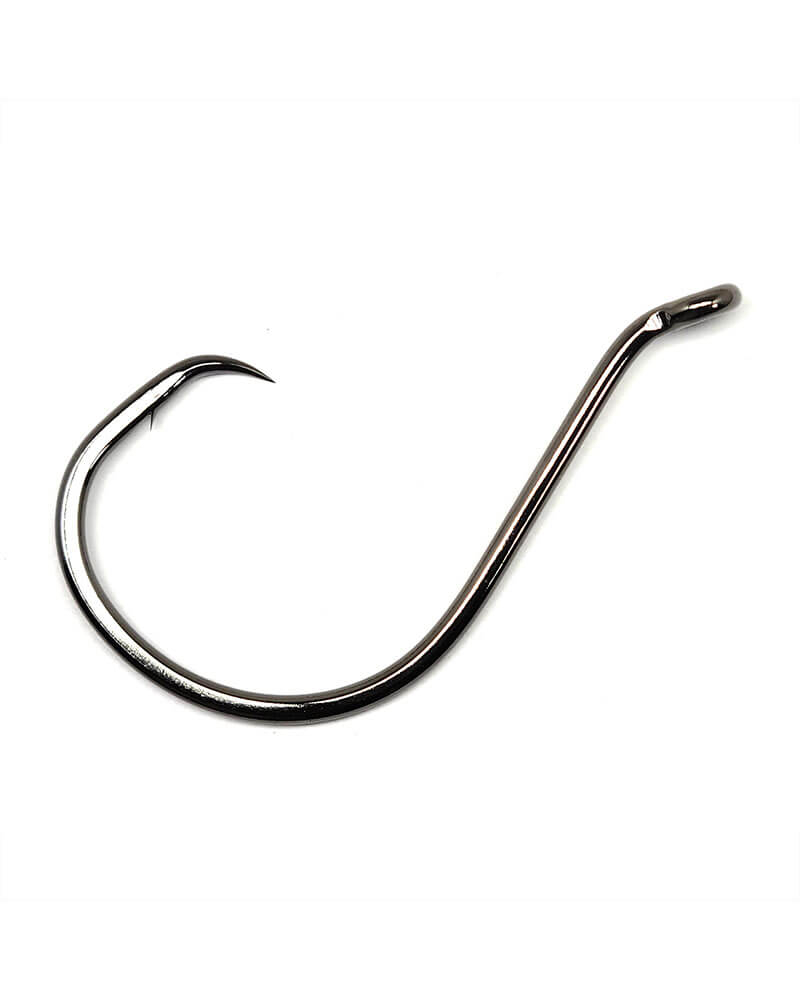 Circle hooks are characterized by large, rounded shapes that resemble a circle, and barbed tips that point back towards the shank. They often feauture large gap sizes compared to their throat sizes, which can give them a bulbous side profile. Eyes can be turned up, down, or inline.
You'll find circle hooks often used when the objective is catch-and-release, because the shape of the hook helps prevent gut-hooking fish. You'll also seem them used when lines are unattended (such as trot lines) or when one angler is fishing multiple rods (such as catfishing). The same shape that prevents gut-hooking allows a fish to set the hook on itself when it takes bait and swims away. This self-setting behavior is why you should never aggressively try to set the hook on a fish that has taken bait on a circle hook, otherwise you may rip the hook straight out of their mouth.
Circle hooks are commonly sold in both inline and offset barb types, meaning the barb of the hook will either be inline with the shank, or offset slightly to increase hookup rates. Some fishing regulations require inline circle hooks to reduce catch-and-release mortality.
Drop Shot Hook
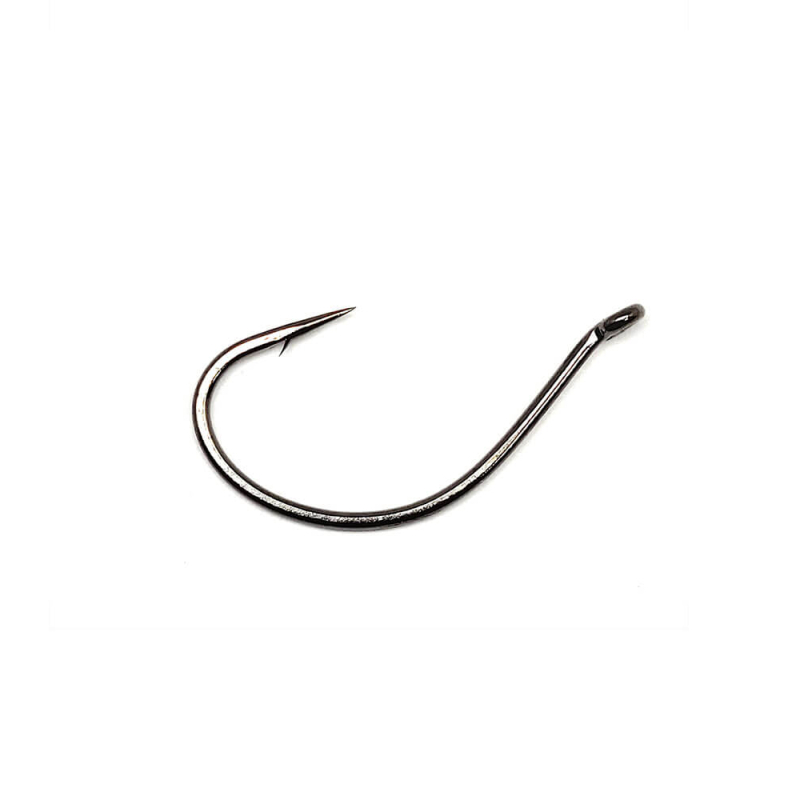
Drop shot hooks are specialized fishing hooks designed for use with the drop shot rig, a finesse technique that suspends a soft plastic bait above a weight resting on the bottom. These hooks are typically small, lightweight, and feature a wide gap or octopus-style design to maximize hook penetration while allowing the bait to move naturally in the water. The hook is tied directly to the line, with a leader extending below it to the sinker.
Drop shot hooks are most commonly used when targeting largemouth bass, smallmouth bass, spotted bass, perch, and walleye in clear water or during tough fishing conditions. They excel around deep structure, rock piles, ledges, docks, and submerged vegetation where fish are holding close to the bottom. The subtle presentation makes drop shot hooks especially effective when fish are inactive or reluctant to chase faster-moving lures.
Browse drop shot hooks for sale
EWG Hook (Extra Wide Gap)
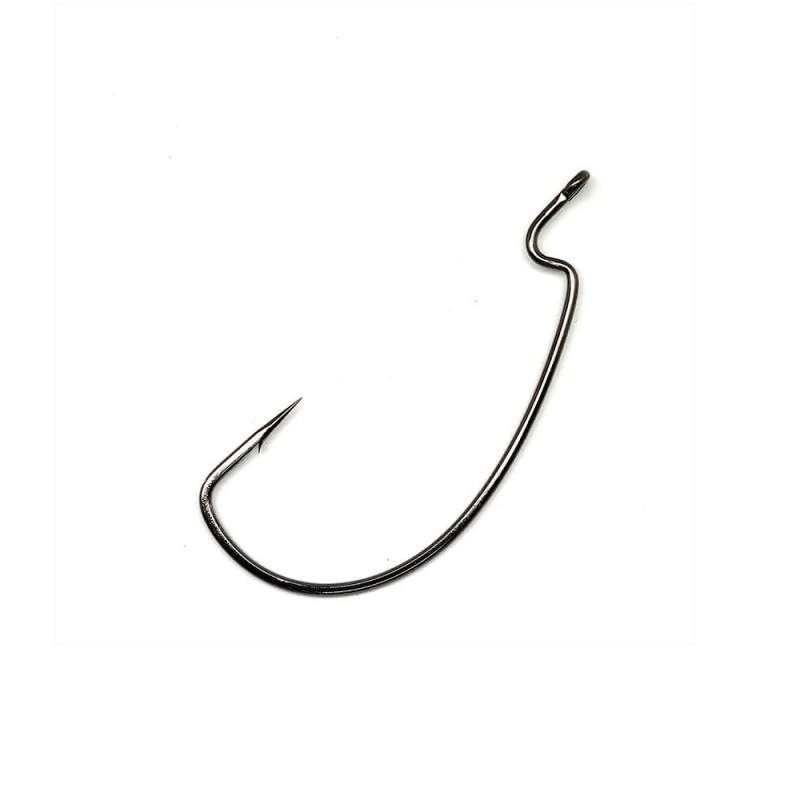 EWG (Extra Wide Gap) hooks are fishing hooks designed with a wider distance between the shank and hook point than standard worm hooks. This extra clearance allows the hook to accommodate bulky soft plastic baits while providing enough room for the hook point to penetrate cleanly during a hookset. Many EWG hooks also feature an offset bend near the eye, helping hold soft plastics securely in place and enabling effective weedless rigging.
EWG hooks are most commonly used for bass fishing with soft plastic worms, creature baits, craws, tubes, stick baits, and paddle-tail swimbaits. They perform especially well around thick vegetation, brush piles, submerged timber, lily pads, and other heavy cover where exposed hooks are prone to snagging. Their versatility and weedless design make EWG hooks one of the most popular choices for anglers fishing soft plastics in both shallow and moderately deep water.
Browse extra wide gap hooks for sale
J Hook
J hooks are the traditional hook design that most anglers recognize, featuring a shape similar to the letter "J." Their simple design makes them one of the most versatile hook styles for both freshwater and saltwater fishing. J hooks are available in countless sizes and configurations, making them suitable for live bait, cut bait, artificial lures, and a wide variety of target species. One of their biggest advantages is their versatility and reliable hook-setting performance when the angler actively sets the hook. However, because they are more likely to hook fish deeper if swallowed, they are generally less suitable for catch-and-release fishing than circle hooks.
Jig Hook
Jig hooks look a lot like baitholder hooks or aberdeen hooks with an eye that is turned 90 degrees from the shank. These hooks are designed to have lead weight molded around this 90 degree bend to form a jig head. More recently, finesse anglers have been using jig hooks for experimental presentations without a weight attached.
Neko Hooks
Neko hooks are specialized fishing hooks designed for use with the popular Neko rig, a finesse presentation that excels at tempting pressured or finicky fish. These hooks typically feature a wide gap, an offset point, and a bait-retaining keeper or barb that securely holds soft plastic worms in place during repeated casts.
The Neko rig is created by inserting a small nail weight into one end of a soft plastic worm while hooking the bait through the middle or slightly toward the weighted end. As the rig falls, the weighted nose reaches the bottom first while the unweighted tail stands up and moves naturally with subtle rod movements or water current. This lifelike action makes the presentation highly effective when bass are feeding cautiously.
Siwash Hook
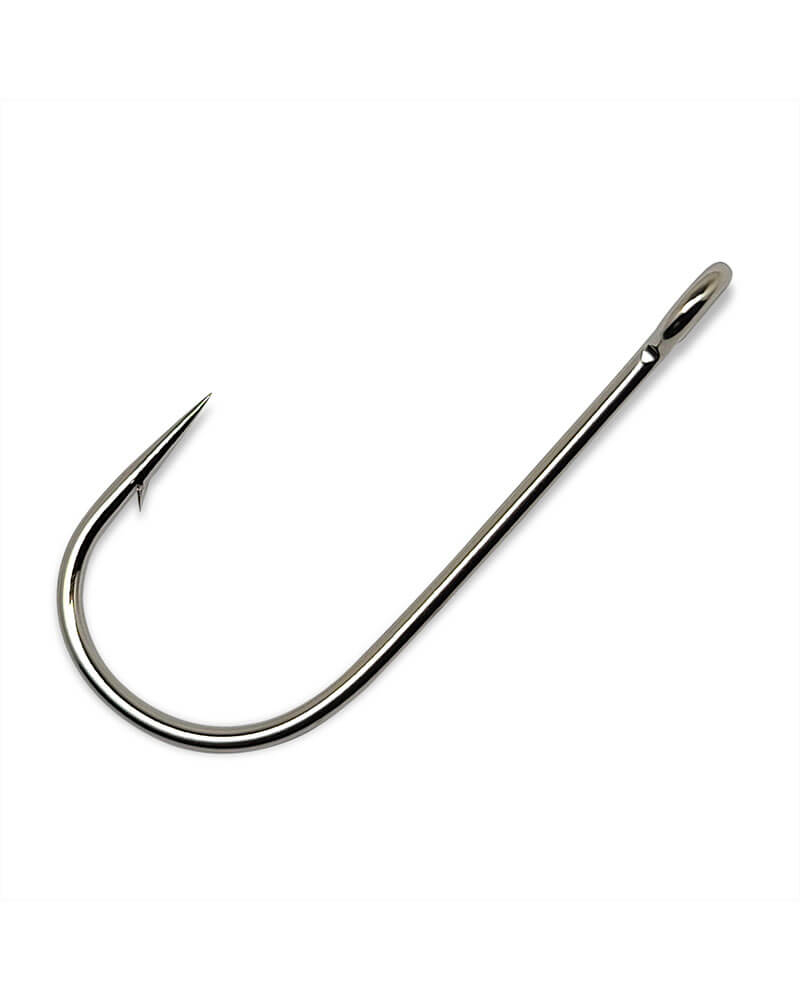 Siwash hooks are single fishing hooks with a long shank and a large, open eye designed primarily as replacement hooks for artificial lures. Unlike treble hooks, a Siwash hook features a single point, making it easier to remove from fish while reducing injury and improving survival rates during catch-and-release fishing.
These hooks are most commonly used to replace the treble hooks found on spoons, inline spinners, plugs, and other hard baits. Many anglers switch to Siwash hooks when fishing in areas where single hooks are required by regulations or when targeting species such as salmon, steelhead, trout, and pike. The open eye allows the hook to be easily attached to a split ring or directly to certain lures without additional hardware.
Siwash hooks are an excellent choice for anglers seeking strong hook penetration, easier fish handling, and a more conservation-friendly alternative to treble hooks.
Treble Hooks
A treble hook is a fishing hook that features three individual hook points joined together on a single shank. This design increases the chances of hooking a fish by providing multiple points of contact during a strike. Treble hooks are commonly factory-installed on many hard baits and are a popular choice for anglers targeting aggressive game fish.
Treble hooks are most often used with artificial lures rather than live bait. Crankbaits, jerkbaits, topwater plugs, spoons, lipless crankbaits, and many inline spinners typically come equipped with one or more treble hooks. Because fish often swipe or strike at these moving lures from different angles, the additional hook points help improve hookup percentages.
Freshwater anglers frequently use treble hooks when fishing for bass, trout, pike, muskie, and walleye, while saltwater fishermen rely on them for species such as striped bass, bluefish, and mackerel. Treble hooks are especially effective when predators are feeding aggressively and attacking fast-moving lures.
Although treble hooks can increase hookup success, they also require extra care during handling. Their multiple points make them more likely to snag clothing, fishing nets, vegetation, and even the angler. Using long-nose pliers or a hook removal tool can make unhooking fish safer and quicker. Some anglers also replace factory treble hooks with larger, smaller, or chemically sharpened versions to better match their target species or fishing conditions.
Wacky Hooks
Wacky hooks are specialized fishing hooks designed for the popular wacky rig, a finesse technique that presents a soft plastic worm with an enticing, natural action. Instead of rigging the bait through the head, the hook is inserted through the middle of the worm, allowing both ends to flutter freely as it sinks. Wacky hooks typically feature a wide gap and short shank, making it easier to achieve solid hooksets while minimizing damage to the bait.
Wacky hooks are most commonly used when targeting largemouth, smallmouth, and spotted bass in lakes, ponds, reservoirs, and slow-moving rivers. They excel around docks, weed edges, fallen timber, and other structure where bass often hold. The slow, subtle fall of a wacky-rigged worm makes this presentation especially effective in clear water, during warm weather, or whenever fish are reluctant to chase faster-moving lures.
Other Hook Features
Barbless Hooks
Barbless fishing hooks are hooks that do not have the small backward-facing barb located just below the hook point. Without a barb, these hooks penetrate easily and can be removed from a fish quickly with minimal handling. This makes barbless hooks a popular choice for catch-and-release fishing, as they can help reduce injury and stress to the fish while allowing for a faster release.
Barbless hooks are commonly used when targeting trout, salmon, steelhead, and other sport fish in waters where regulations require them. Many fly anglers also prefer barbless hooks because they simplify hook removal and improve safety if an accidental hook-up occurs. While they require anglers to maintain steady line tension during the fight to prevent fish from throwing the hook, barbless hooks offer an effective, conservation-minded option for responsible fishing.
Weedless Hooks
Fish love to hide in weeds, so anglers are habitually throwing rigs into thick weed beds with predictable results. Every angler has experienced this song and dance starting with a cast, retrieving a thick clump of vegetation, cleaning off the hook, and doing it all over again. It's just a part of fishing that we all get used to.
To minimize frustration, the fishing industry has developed and marketed weedless hooks to keep vegetation off our lines. They achieve this by wrapping lengths of wire or synthetic material around the eye or shank of a fishing hook that somewhat obstructs the gap. This material is strong enough to guide the tip of the hook past vegetation or snags before it can loop around a stem or stick, but flexible enough to get out of the way when the hook is set on a fish.
Browse weedless hooks for sale
While no hook is 100% weedless in real-world fishing situations, they can help minimize the amount of vegetation you drag to the boat or shore when properly rigged. Without weedless hooks, fishing thick weed beds for bass would be infuriating.
Weighted Hooks
Weighted hooks are fishing hooks that feature a built-in weight, usually molded onto the shank near the eye or bend of the hook. This integrated weight helps soft plastic baits sink more quickly and maintain a natural swimming action without the need for a separate sinker. By keeping the weight attached to the hook, anglers can create streamlined presentations that are less likely to snag in heavy cover.
Weighted hooks are most commonly paired with soft plastic swimbaits, paddle tails, flukes, and large worms when targeting species such as largemouth bass, smallmouth bass, pike, and other predatory fish. They are especially effective around submerged vegetation, timber, docks, and other structure where weedless rigging is beneficial. Weighted hooks also allow anglers to fish deeper water or faster currents while preserving the realistic movement that makes soft plastics so effective.