
Fishing reels are designed to cast, retrieve, and store fishing line in the pursuit of catching fish for recreation, sport, or survival. There are many different types of fishing reels that all retain these basic functions, but they can achieve this in very different ways. Each reel type has its advantages and disadvantages. But the one thing to remember is this: the fish don't care what reel you are using, as long as you are catching them.
Spincast Reels
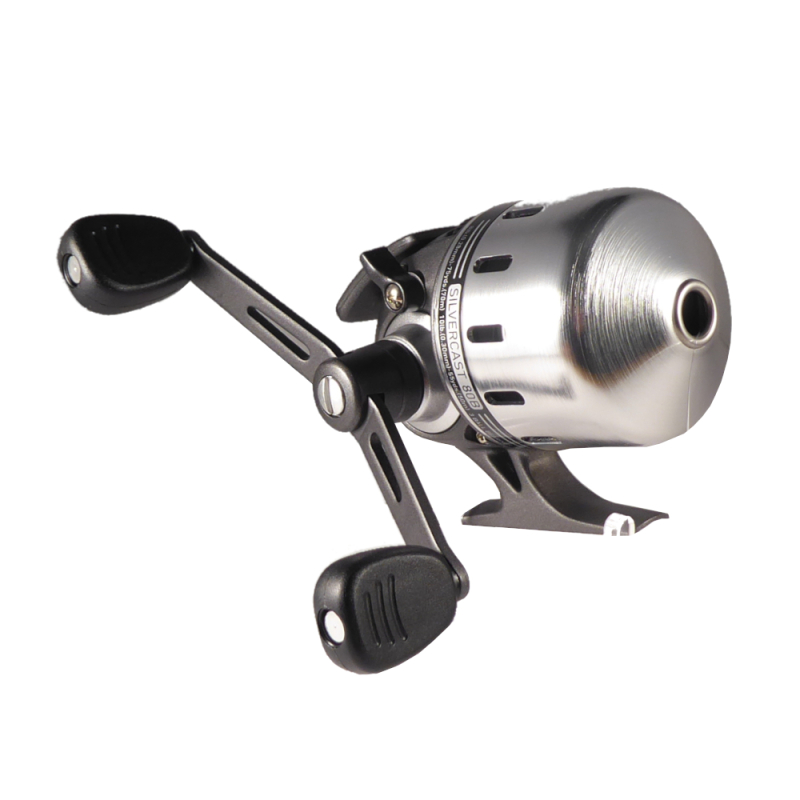 Spincast reels are often the first reel that an angler experiences. A spincast reel will catch a fish just as well as any other reel, but they are designed with simplicity in mind, and this is why you will often see them marketed towards children. Many anglers' first fishing memory is catching trout or panfish on an enclosed spincasting reel.
The focus of a spincast reel is simple casting, and simple retrieving. They store the spool within an enclosed compartment. This protects the spool from the angler, preventing any fiddling with the line. The downside to this is that any potential problems with line spooling won't become apparent until they absolutely have to be dealt with. Casting is achieved by pushing a single button. This removes some of the complication of the multiple movements required to cast with other reel types. Push button, cast, release button. There is almost no learning curve, making it perfect for children and novice anglers.
Drag can be adjusted on a spincast reel, but unlike other reel types where drag is adjusted often depending on the situation, drag on a spincast is often designed with little intention to adjust it while reeling in a fish. This may seem like a shortcoming, but it makes sense when you consider that the spincast experience is not supposed to be complicated.
Spincast reels are simple and easy, but that doesn't mean an experienced angler can't effectively utilize one. Want to have fun with a spincast combo? Rig up a bottom rig with 6lb mainline, and make short casts. You'll have a blast.
Advantages of Spincast Reels |
Disadvantages of Spincast Reels |
|
|
Spinning Reels
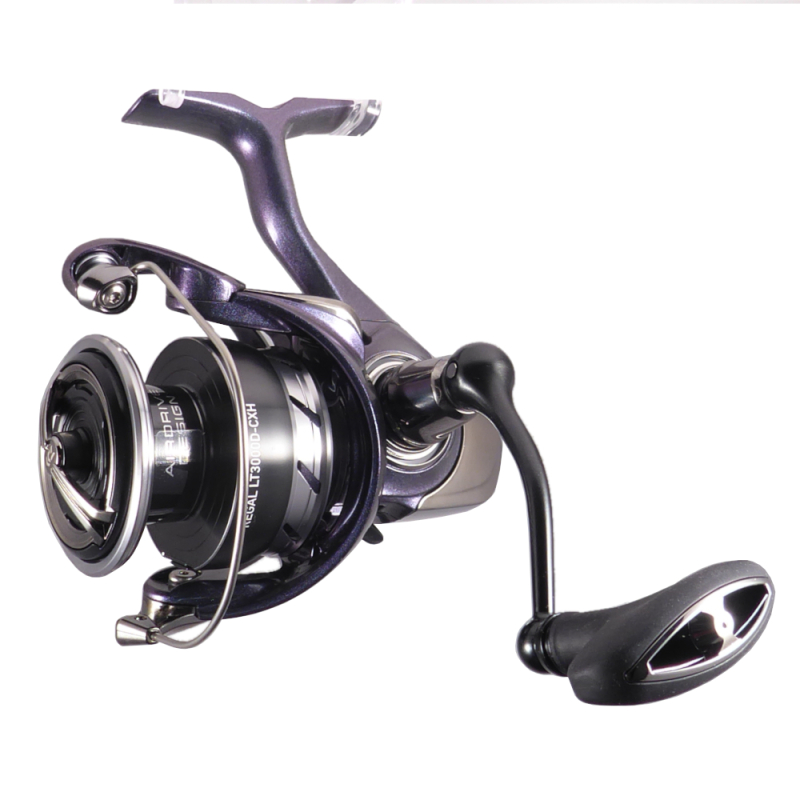 Spinning reels are the most common type of fishing reel, and you'll find them in nearly every type of fishing. Manufactured in sizes ranging from ultra light to heavy duty, you'll find spinning reels utilized in ice fishing, freshwater fishing, bass fishing, inshore saltwater fishing, offshore saltwater fishing, surf fishing, and everywhere in between. With manufacturers building dozens of models in their lineups, modern options are nearly endless.
Spinning reels have an exposed spool surrounded by a spinning bail that winds the line. When casting, line will uncoil from the spool, and the spool does not spin during casting. With the spool easily visible, any problems with the line become apparent immediately, and can be dealt with before they cause a bird's nest of tangled line.
The drag adjustment on a spinning reel is usually located on the front of the spool, but some manufacturers have utilized designs that place the drag on the rear of the body. Anglers who fight larger fish will often find themselves working the drag on a spinning reel often, so it's important to be comfortable adjusting it while you have a fish on the line.
Another interesting feature of the spinning reel is that it's not right or left hand specific. Because spinning reels are not mechanically limited to favor right or left handed operation, all spinning reels can have their handles swapped from side to side to accommodate the angler's preference. Many right handed anglers will use their spinning reels in a left handed configuration, using their dominant right hand to control the rod, and using their left hand to crank the reel.
Spinning reels are an excellent choice when paired with monofilament mainline, or light weight braid. However, they can experience decreased casting performance when paired with thicker braid.
Advantages of Spinning Reels |
Disadvantages of Spinning Reels |
|
|
Baitcasting Reels
Baitcasting reels are made for high precision casting with heavy braided lines. You'll often see them used to wrestle big bass from heavy cover. What you won't see is a baitcasting reel used on an ultralight rod. 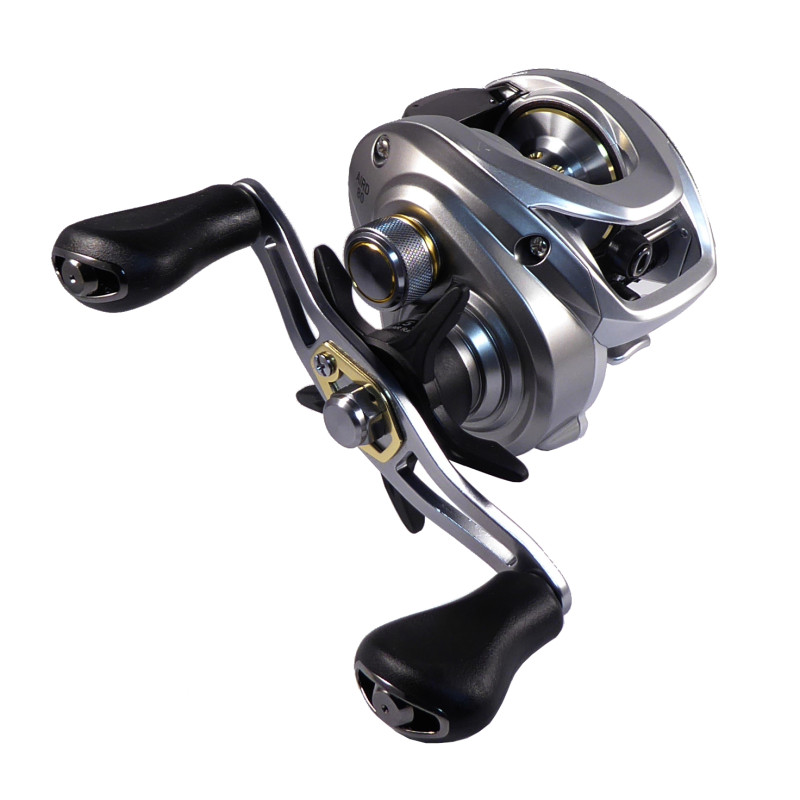 Baitcasting reels are designed in such a way that the spool that holds the line spins under both line retrieve and casting. This rotational motion while casting is why baitcasting reels are subject to something called backlash.
When casting with a baitcaster, the fastest part of the cast is as the angler releases the line and it begins to roll off the spool. While the lure is in the air, the mainline comes off the spool at more or less the same speed. But when the lure hits the water, it slows immediately, but the line following it does not, and the spool continues to spin. This is backlash. To prevent backlash, the angler needs to control the motion of the spool with their thumb. This is one of the reasons that the baitcasting reel is considered a tool best utilized by experienced anglers.
Due to the mechanical limitations of the baitcasting reel, they cannot be quickly reconfigured for left handed operation by swapping the handle. So baitcasting reels have to be built either right or left handed. This is an important consideration for an angler when buying a new baitcasting reel.
Another feature of baitcasting reel is their high gear ratios. If you've ever watched a professional bass fisherman pull in a bass during a tournament with a baitcaster, you've been amazed at how fast they can do it. That's because higher gear ratios reel more line per turn of the crank. The goal is to get the fish in the boat and back in the water as fast as possible.
Baitcasting reels are the best choice for an angler who wants a heavyweight rod and reel to pull large fish out of heavy cover. A baitcaster paired with 15-30 pound braid will be strong enough to pull the largest bass out of a weed bed or grass patch that it really doesn't want to leave.
Shop baitcasting reels for sale
Advantages of Baitcasting Reels |
Disadvantages of Baitcasting Reels |
|
|
Conventional Reels
If you're a freshwater angler who fishes from the bank or a small boat, you won't often see conventional fishing reels. But if you spend your time on a sportfisher in deep saltwater, you're going to see conventional reels almost exclusively.
Conventional fishing reels release and retrieve on a spinning spool much like a baitcaster, but you won't often cast with one. Instead, conventional reels are most likely to be used to drop bait into deep water, or trolled behind a moving boat. Conventional reels can also be some of the largest available. They are designed to hook into some of the largest fish in the ocean, and winch them off reefs and out of wrecks by sheer force. A good way to think of it is that a conventional reel is just a giant winch with a drag system.
Because of their size and the amount of line that can be spooled on a conventional reel, deep sea anglers will sometimes use power-assisted reels to retrieve hundreds of yards of line, so they can save their energy for fighting fish. Imagine dropping and retreiving thousands of yards of line over the course of a fishing trip by hand, before ever hooking into your first fish.
Fly Reels
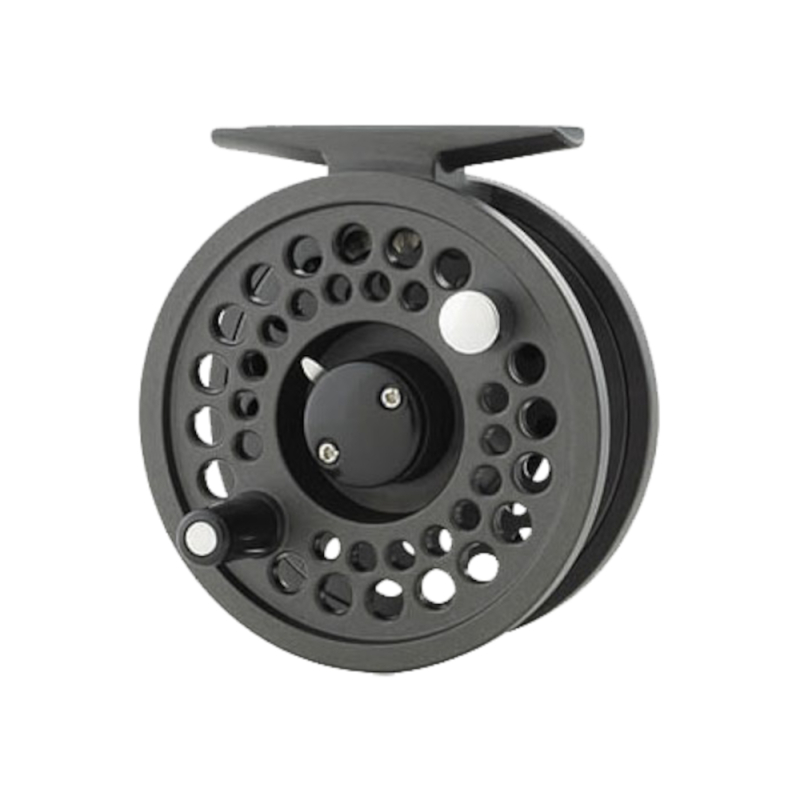 Fly fishing reels are very simple reels compared to spinning reels and baitcasting reels, and they are tailored specifically to the fly fishing experience. They serve two main purposes: a place to store spooled line, and a device to provide drag to fight a fish.
Fly fishing reels are not used to cast, so they don't have any mechanical components to support it. This makes them light in comparison to other types of reels, and they serve to balance a fly rod. It's also worth mentioning that all fly fishing reels have a 1:1 ratio, because there are no gears to convert the speed of hand cranking motion.
Fly fishing is an entirely different world. If you are a fly angler, you know that the reel is a smaller part of the angling equation than in other types of fishing.